
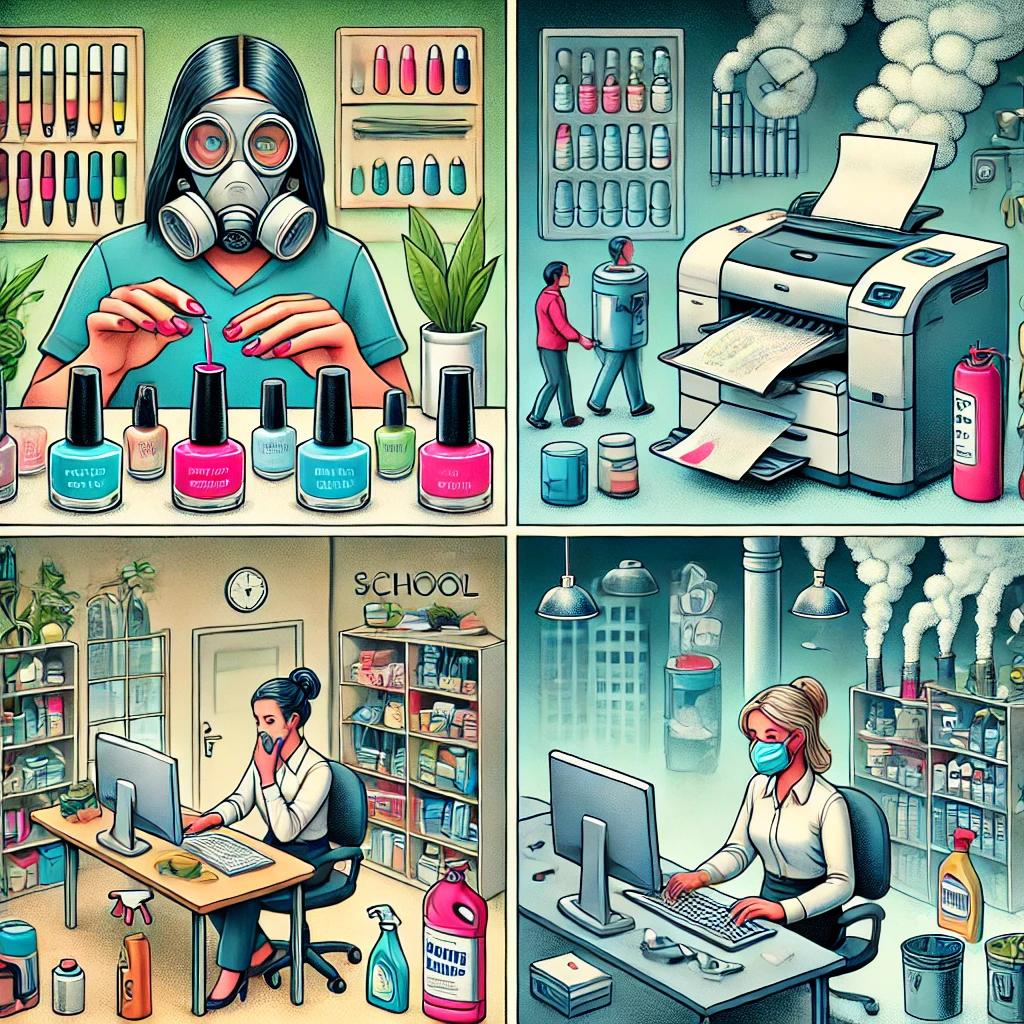

In this post, we’ll compare the toxic exposures in nail salons with those in other everyday work environments, exploring similarities, differences, and practical steps to mitigate these risks
| workplace Type | Common Toxic Chemicals | Sources and Exposure Risks |
| Nail Salons | Formaldehyde, Toluene, Dibutyl Phthalate (the "Toxic Trio"), Acetone, Methacrylate compounds | Found in nail polish, adhesives, removers; exposure through inhalation and skin contact |
| Offices | Volatile Organic Compounds (VOCs), Flame Retardants, Formaldehyde, Mold Spores | Present in furniture, carpeting, air fresheners, and poorly ventilated spaces |
| Schools | Cleaning Agents (Ammonia, Bleach), VOCs, Lead, Asbestos (in older buildings) | Found in disinfectants, art supplies, dust from aging infrastructure |
| Retail Stores | VOCs, Formaldehyde, Fragrance Chemicals, Dust & Microplastics | Emitted from new merchandise, displays, air fresheners, and packaging materials |
Similarities Across Work Environments
1. Poor Ventilation: In both salons and other workplaces, inadequate airflow leads to higher concentrations of airborne toxins.
2. Long-Term Health Risks: Chronic exposure to these chemicals has been linked to respiratory issues, skin conditions, and even neurological effects.
3. Lack of Awareness: Many workers in both sectors are unaware of the long-term health risks posed by daily exposure.
Key Differences
• Nail salon workers experience more direct exposure through handling chemical products and working in close proximity to fumes.
• Offices and schools may have lower acute risks but still expose employees to hidden toxins through prolonged contact with treated furniture, cleaning chemicals, and indoor air pollutants.
• Retail workers face fluctuating exposures, depending on new product shipments, store ventilation, and cleaning routines.
How to Mitigate Workplace Chemical Risks
Regardless of the industry, steps can be taken to reduce toxic exposure:
✅ Improve Ventilation – Invest in air filtration systems, open windows when possible, and use local exhaust ventilation in high-risk areas.
✅ Use Safer Products – Opt for non-toxic nail products, fragrance-free office supplies, and green-certified cleaning agents.
✅ Encourage Protective Measures – Nail technicians should wear gloves and masks, while office workers can use plants and air purifiers to reduce indoor pollutants.
✅ Raise Awareness – Employers should educate staff on workplace chemical hazards and promote safe practices.
Final Thoughts
While nail salons often receive attention for toxic chemical exposure, the reality is that many everyday work environments pose similar risks—often overlooked. By recognizing these hazards and implementing proactive safety measures, we can create healthier workplaces for all employees.