
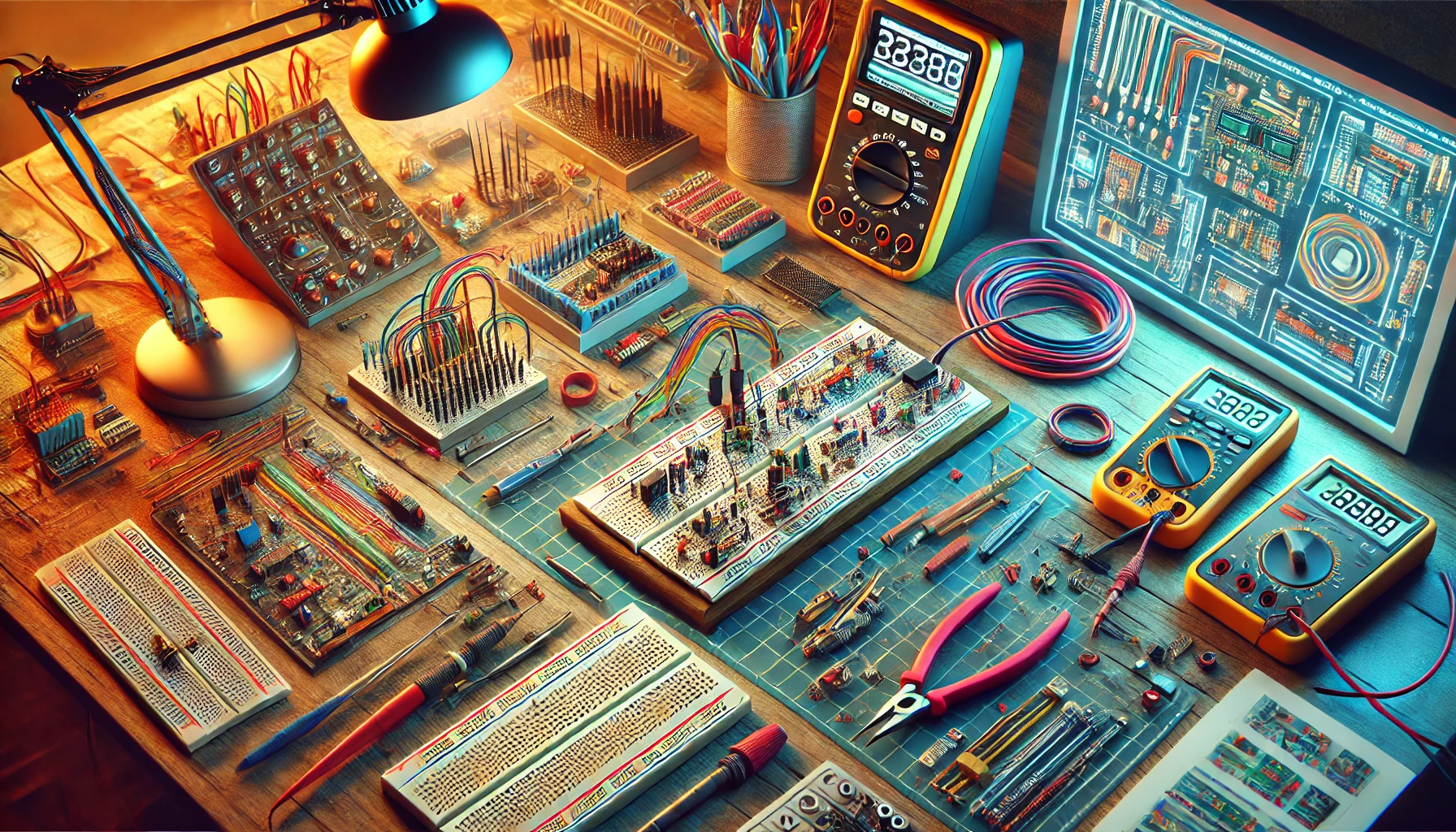

Why Prototyping Matters
1. Verification of Design Concepts
Turning schematics and simulations into a physical circuit helps confirm that the initial ideas work as intended and are not just theoretically sound.
2. Time and Cost Efficiency
Early identification and resolution of issues can save a significant amount of time and money, preventing major setbacks later in the development cycle.
3. Flexibility and Refinement
Working with a physical prototype allows for quick adjustments, making it easier to refine circuit layouts or swap components before committing to a final design.
Common Prototyping Techniques
1. Breadboards
Breadboards are ideal for early-stage exploration. They provide a quick, solder-free way to assemble circuits, enabling rapid testing and reconfiguration.
2. Stripboards and Perfboards
These boards require soldering but offer greater stability and durability than breadboards. They are perfect for semi-permanent builds and can handle moderate complexity.
3. Wire Wrapping
Once a popular method, wire wrapping involves wrapping thin wires around posts to create reliable, low-resistance connections. While less common today, it can still be useful for specific applications that demand stable, high-frequency performance.
Each technique allows developers to build circuits that remain electrically identical to the final product—even if they differ in physical form—making them invaluable in verifying design integrity.
Challenges in the Prototyping Phase
1. Component Placement
Crowded layouts can cause errors and make troubleshooting difficult. Strategic positioning of components is essential to avoid shorts, tangles, and confusion.
2. Electrical Noise and Interference
High-frequency signals or power lines that are too close together may introduce noise and interference, affecting overall circuit performance.
3. Material and Tool Constraints
Limited access to advanced equipment or specialized components can slow down the prototyping process.
Troubleshooting and Refinement Strategies
• Systematic Testing: Break down your circuit into modules and test each separately to isolate issues quickly.
• Component Substitution: Swap out suspected faulty components to rule them out as a source of error.
• Shielding and Grounding: Use shielding techniques and proper grounding to minimize electrical noise.
• Iterative Updates: Document changes meticulously and update the prototype incrementally to keep track of improvements and setbacks.
By addressing these challenges early, startups can reduce development time and increase the reliability of their final products.
Final Thoughts
Prototyping is an indispensable step for any electronics startup. From initial concept validation to refining circuit layouts, it offers a valuable hands-on learning experience that can significantly improve your product’s market readiness. By carefully selecting the right prototyping technique and proactively tackling common challenges, you’ll set the stage for a smoother path to production—and ultimately, a more successful product launch.
Ready to take your electronic prototype to the next level?
Stay tuned for more insights on component sourcing, manufacturing partnerships, and how to streamline your go-to-market strategy—designed with startups in mind!