
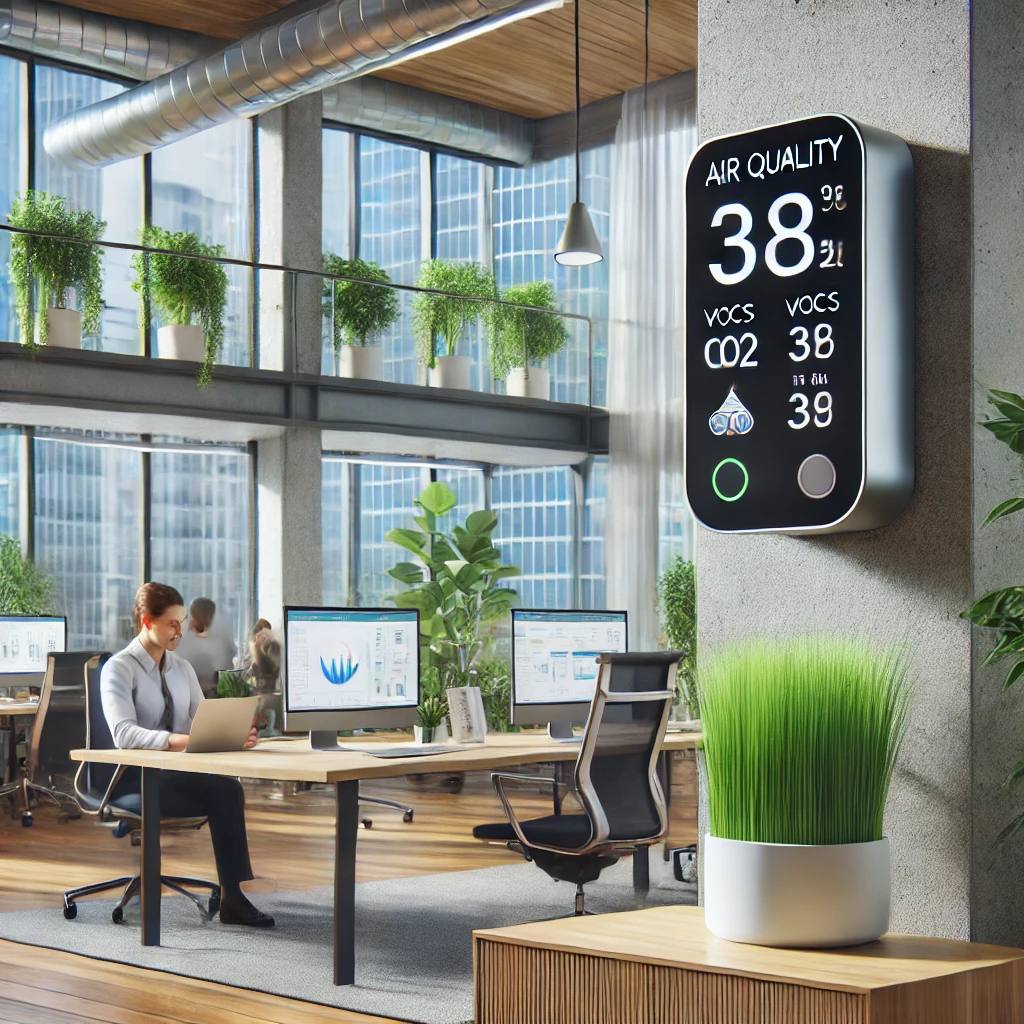

In today’s world, businesses face growing pressure to prioritize health, sustainability, and compliance. One critical yet often overlooked factor is indoor air quality (IAQ)—a key component of workplace safety and operational efficiency. Investing in air quality monitoring may seem like an additional expense, but the long-term cost-benefit analysis strongly favors proactive adoption.
The Cost of Poor Air Quality
Without proper air quality monitoring, businesses expose themselves to multiple risks, including:
1. Health-Related Costs
• Increased Sick Leave: Poor air quality leads to respiratory issues, allergies, and fatigue, increasing employee absenteeism.
• Reduced Productivity: Cognitive function declines in environments with high CO₂, VOCs, and particulate matter. Studies show that clean air can boost productivity by up to 10%.
• Healthcare Expenses: Long-term exposure to harmful pollutants results in chronic conditions, increasing medical costs for both employees and businesses.
2. Compliance & Legal Risks
• Regulatory Fines: Many industries must comply with air quality regulations. Non-compliance can result in hefty fines and operational shutdowns.
• Lawsuits & Liability: Employees or customers affected by poor air quality can sue for damages, leading to significant financial and reputational losses.
3. Operational & Facility Costs
• Equipment Damage: Airborne pollutants accelerate wear and tear on machinery, increasing maintenance costs.
• Energy Inefficiency: Poor ventilation and air quality force HVAC systems to work harder, driving up energy consumption.
The Benefits of Air Quality Monitoring
Investing in real-time air quality monitoring provides tangible financial and operational advantages:
1. Increased Employee Productivity & Well-Being
• Studies show that optimal indoor air quality improves decision-making, concentration, and overall workplace efficiency.
• A healthier work environment reduces absenteeism and enhances employee satisfaction.
2. Cost Savings on Healthcare & Compliance
• Proactive monitoring minimizes health risks, lowering medical insurance claims and compensation costs. • Businesses stay ahead of regulations, avoiding fines and compliance-related expenses.
3. Extended Equipment Lifespan & Energy Efficiency
• Monitoring air quality helps prevent equipment degradation, reducing maintenance and replacement costs.
• Optimized ventilation leads to energy savings of up to 30%, cutting operational expenses.
4. Enhanced Reputation & Competitive Advantage
• Demonstrating a commitment to health and sustainability builds trust with employees, clients, and investors.
• Many consumers and corporate partners now prioritize ESG (Environmental, Social, and Governance) compliance, making clean air an attractive business asset.
ROI: The Numbers Speak for Themselves
While the upfront investment in air quality monitoring systems may range from a few hundred to several thousand dollars, businesses typically see a 5x to 10x return in cost savings and productivity gains. Case studies show that for every $1 invested in IAQ improvements, businesses can gain $5 to $10 in benefits through reduced healthcare costs, energy efficiency, and employee performance.
Conclusion
Ignoring air quality can be a costly mistake, impacting health, productivity, and compliance. The business case for air quality monitoring is clear—the benefits far outweigh the costs. Investing in smart air monitoring solutions is not just about compliance; it’s about creating a healthier, more efficient, and more profitable workplace.
Are you ready to protect your business and workforce? Discover how Smart Detect’s air quality monitoring solutions can help you make the smart choice. Contact us today to learn more!